
Perineal Care After Birth: What You Can Do From Day One
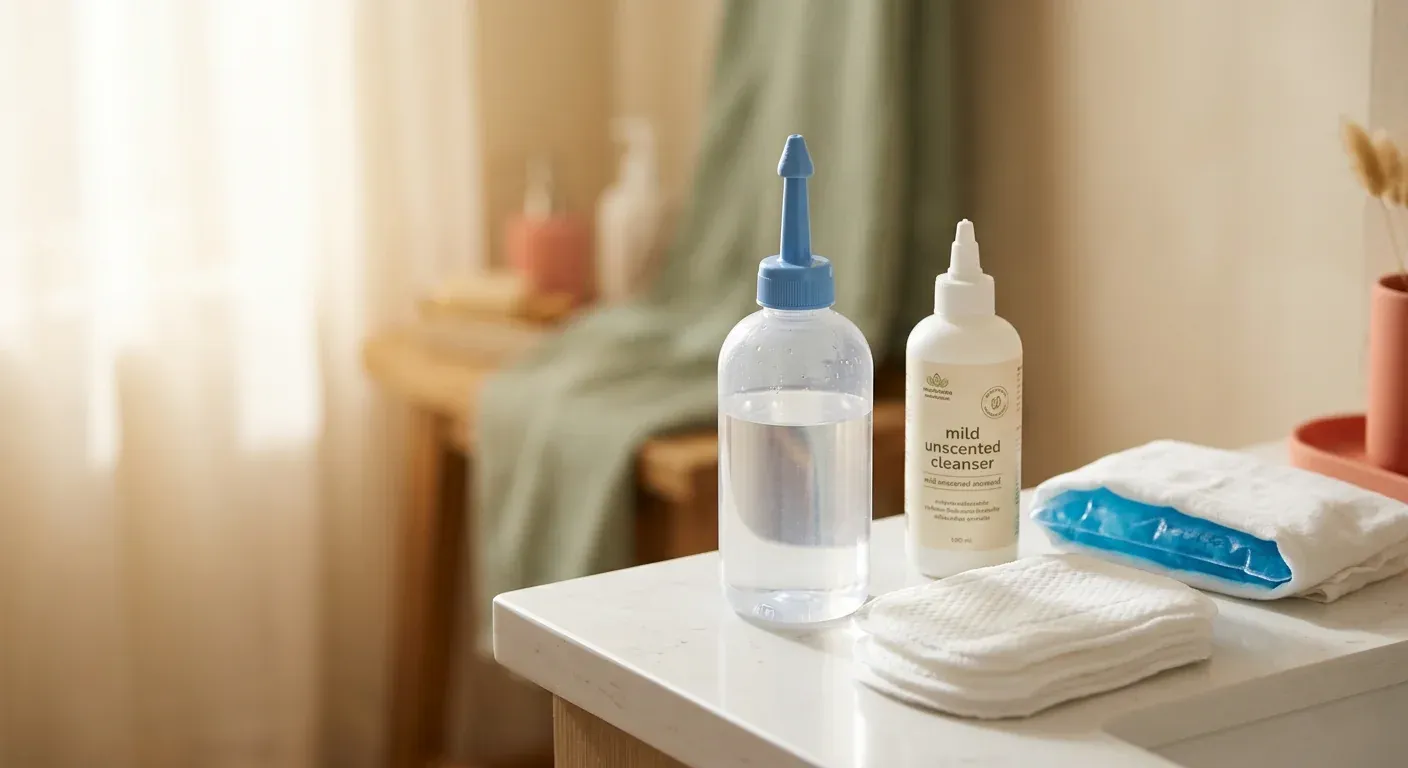
Healing is not just waiting — there is plenty you can do from day one to feel more comfortable and prevent infection
If you had a vaginal birth and experienced an episiotomy or a perineal tear — even a small one — this article is for you. The perineum is the area between the vagina and the anus; it absorbs enormous force during delivery. Pain in the first two to three weeks is normal — but there is a lot you can genuinely do from day one to make recovery more comfortable.
For those who had a cesarean, see our C-section recovery guide instead.
Episiotomy and Perineal Tears: Understanding What Happened
An episiotomy is a deliberate incision made by the doctor to widen the birth canal when necessary — for a large baby, very fast delivery, or to assist with forceps or vacuum.
A perineal tear can occur naturally. Tears are graded by depth [1]:
| Degree | Depth | Treatment |
|---|---|---|
| 1st degree | Skin and vaginal lining only | May not need stitches |
| 2nd degree | Skin and perineal muscle | Requires stitches — most common |
| 3rd degree | Extends into the anal sphincter | Specialist repair; longer healing |
| 4th degree | Through the sphincter into the rectal lining | Requires operating room; longest recovery |
Your care team will tell you which degree you have. If you're not sure, ask before you leave the delivery room. The sutures used are dissolvable — you do not need to have them removed [1].
Daily Wound Care: Steps You Can Do at Home
The Peri Bottle (Squeeze Bottle)
The single most important tool in the first days is a peri bottle — a small plastic bottle filled with warm water that you spray gently over the perineum while urinating [2].
How to use:
- Fill the bottle with plain warm water — no soap or any additives
- While urinating, spray warm water simultaneously — this dilutes the urine and reduces the stinging sensation
- After urinating, spray again and pat dry front-to-back with a soft cloth
Most hospitals will send you home with a peri bottle. If you don't have one, a regular plastic bottle with a small hole in the lid works well.
Ice Packs in the First 24–48 Hours
In the first 24–48 hours, cold is the most effective way to reduce swelling and pain [2]:
- Wrap ice in a soft cloth or thin towel — do not apply ice directly to skin
- Apply to the perineum for 10–20 minutes at a time
- Some hospitals provide single-use cold packs — use as directed
After 48 hours, once swelling begins to subside, a warm sitz bath becomes more helpful than cold.
Sitz Bath (Warm Shallow Soak)
A sitz bath means soaking the perineal area in shallow warm water in a basin or a shallow bathtub [2]:
- Warm water, not hot — deep enough to cover buttocks and hips, about 5 minutes
- Use plain water — no soap, bath salts, or antiseptics — these can irritate healing tissue
- Repeat 2–3 times per day
Frequent Pad Changes and Air Exposure
- Change your sanitary pad every 4–6 hours or whenever it is wet — moisture accumulation slows healing and raises infection risk
- Choose soft, unscented pads
- If possible, lie flat without underwear for 10–15 minutes per day to allow air circulation around the wound
Pain Relief
Pain relief such as paracetamol or ibuprofen (consult your pharmacist or doctor before use while breastfeeding) helps manage pain and inflammation [1]. Some hospitals provide topical local anesthetic spray or cream for the perineal area — ask your care team before discharge.
Your First Bowel Movement After Birth: It's Not as Scary as You Think
Many new mothers dread the first post-birth bowel movement, fearing it will hurt the stitches or cause them to open. This fear is understandable — but perineal sutures are designed to withstand these natural forces.
Things that help [2]:
- Stay well hydrated and eat plenty of high-fiber foods
- If your stool is very hard or you haven't had a bowel movement after 3–4 days, talk to your doctor or pharmacist about a stool softener — don't self-medicate without consulting them
- Support the perineum gently with a clean hand or folded pad while bearing down — this reduces the feeling of tension
Kegel Exercises: You Can Start Earlier Than You Think
Kegel exercises (pelvic floor exercises) help restore the muscles that stretched during delivery and reduce pressure on the healing wound [1][2].
You don't need to wait for the wound to fully heal — you can start gently from day one if there's no severe pain. If they feel very painful, stop and wait a day or two before trying again.
How to do them:
- Find the muscles — imagine stopping the flow of urine mid-stream
- Contract and hold for 3 seconds, then release for 3 seconds
- Repeat 10–15 times per set, 3 sets per day
- Breathe normally throughout — do not tighten your abdomen or buttocks
If you have urinary or fecal incontinence after birth (more common after 3rd- or 4th-degree tears), don't wait — ask your doctor for a referral to a pelvic floor physiotherapist.
Warning Signs: When to See a Doctor
Most perineal wounds heal well within about one month [1]. But there are signs that require prompt medical attention — do not wait and see:
Contact your doctor or go to the emergency department if [1][2]:
- The wound area becomes increasingly red, swollen, or hot a few days after birth (minor inflammation on day one is normal; worsening after initial improvement is not)
- Pus or abnormal discharge from the wound
- Unusual or foul odor from the wound area — a sign of possible infection
- Pain that is getting worse instead of better after 3–4 days
- Wound dehiscence — the wound edges that should be closed together appear to be opening, even slightly — see your doctor for assessment
- Fever of 38°C or above together with wound pain
- Foul-smelling lochia — even if not directly from the wound, an abnormal smell from the vagina after birth can indicate uterine infection
Perineal wound infections are uncommon but respond very well to treatment when caught early.
Yu Fai: Special Considerations If You Have Perineal Stitches
Yu fai is a traditional Thai postpartum practice centered on rest, warmth, and nourishing food — it has real value in creating space for a mother to genuinely rest and recover.
However, one specific caution applies when you have an unhealed perineal wound: if you practice yu fai, avoid lying on heated bricks or applying direct heat to the perineum. In the first 24–48 hours, direct heat can increase swelling and slow wound healing. A warm (not hot) sitz bath as described above is far more appropriate than external heat. Consult your OB-GYN about what is safe for your specific situation.
Summary: Perineal Care Timeline
| Timeframe | What's Happening and What to Do |
|---|---|
| First 24–48 hrs | Ice packs; peri bottle every time you urinate; change pads frequently; try gentle Kegels if comfortable |
| Days 3–7 | Switch to warm sitz bath instead of ice; pain should begin to gradually reduce |
| Weeks 2–4 | Stitches dissolving; pain decreasing noticeably; Kegels consistently |
| ~1 month | Most wounds fully healed; some heaviness or tightness is still normal |
| After 6 weeks | Postpartum checkup — doctor assesses wound and discusses intercourse |
See a doctor urgently if you have fever, wound opening, pus, unusual odor, or pain that is getting worse rather than better.
แหล่งอ้างอิง
- NHS — Episiotomy and perineal tears: stitches heal within 1 month; pain unusual after 2–3 weeks; infection signs (red swollen skin, pus, persistent pain, unusual smell); paracetamol safe while breastfeeding; pelvic floor exercises recommended.
- Mayo Clinic — Postpartum care: peri bottle (squirt bottle of warm water during urination); sitz bath (shallow warm water, 5 min); ice packs in first 24–48 hr; Kegel exercises (3 sec tighten / 3 sec relax / 10–15 reps / 3x day); stool softener if needed — discuss with provider.
- ACOG — Postpartum Care and You: comprehensive postpartum guidance including perineal recovery, warning signs, and the fourth trimester framework.
- Samitivej Hospitals Thailand (samitivejhospitals.com/th) — institutional reference for Thai hospital vocabulary and perineal care terminology used in this article.