
Safe Sleep for Babies: Preventing SIDS, AAP Recommendations
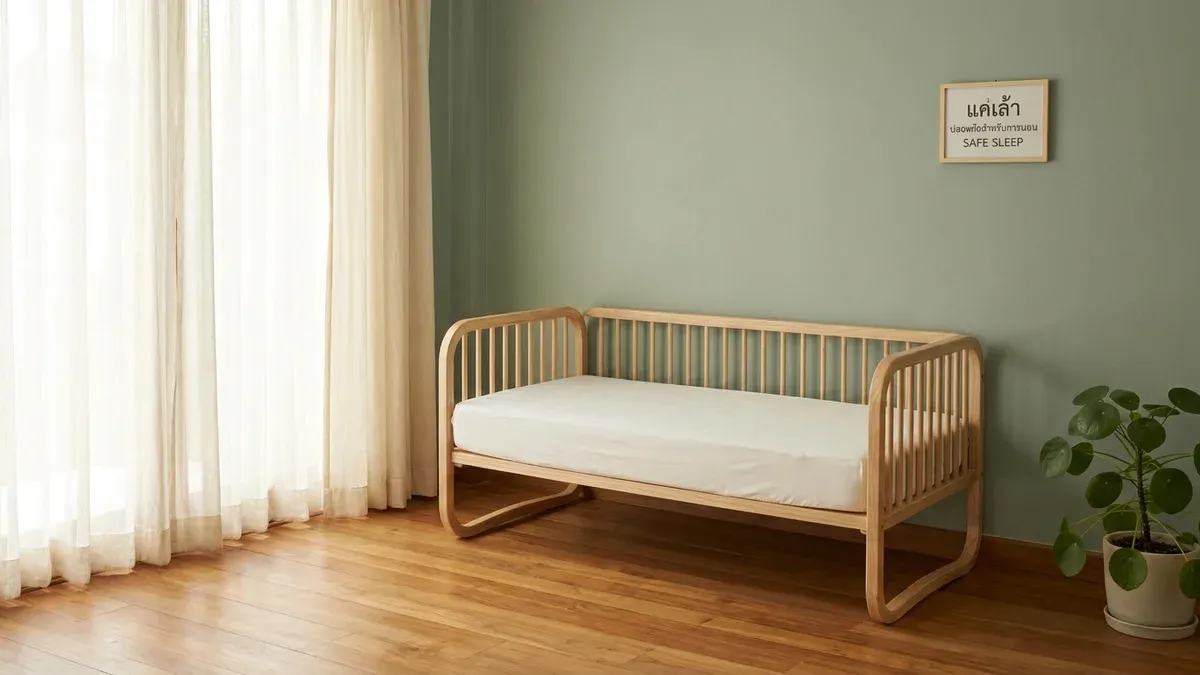
A — Alone · B — Back · C — Crib Three simple words that protect your baby through the first 12 months
SIDS (Sudden Infant Death Syndrome) — the unexplained sudden death of an infant under 1 year, usually during sleep — is a leading cause of infant death in the 1–12 month age group.
The good news: SIDS is largely preventable. Following AAP safe-sleep guidance [1] [2] significantly reduces risk. Since the "Back to Sleep" campaign began in 1994, SIDS rates in developed countries have dropped over 50%.
This article draws on AAP, CDC [3], and the Royal College of Pediatricians of Thailand.
What is SIDS?
- Highest risk: 1–4 months (about 90% of cases occur before 6 months)
- Frequency: roughly 1 in 1,000–2,000 infants in developed countries
- Happens during sleep, often without warning
- Mechanism not fully understood — thought to involve brainstem development affecting breathing and arousal
- Risk factors: stomach sleeping, soft bedding, prematurity, maternal smoking during pregnancy, exposure to second-hand smoke
ABCs of safe sleep
Per AAP [1]:
A — Alone
- Baby sleeps in their own bed, not the parents' bed
- Bed-sharing significantly raises SIDS risk, especially when:
- Baby is under 4 months
- Parents smoke, drink alcohol, or use sleep-inducing medication
- Sleeping on a sofa, armchair, or waterbed
- No people, no pets, nothing else in baby's sleep space
B — on Back
- Always on the back, every sleep — naps and nighttime
- Side-sleeping is not safe — baby can roll to stomach
- Once baby can roll independently (typically 4–6 months), let them settle in their preferred position — but always start on the back
- Tummy time is for awake, supervised play only
C — in a Crib
- Firm mattress that meets safety standards — doesn't sink significantly when pressed
- Crib safety — slats no more than 6 cm apart, no drop-sides, approved standards
- Nothing in the crib:
- No pillows, bumper pads, or positioners
- No blankets, quilts, or sheepskin
- No stuffed animals or toys
- No neck supports or wedges
- Fitted sheets only — never loose
Other key practices
Room-share, don't bed-share
- Baby in your room for at least 6 months, ideally 12
- Cuts SIDS risk by up to 50%
- Use a bedside crib (co-sleeper) — close but separate
Temperature control
- Room temperature 20–22°C (68–72°F) is ideal
- No heavy blankets — use a sleep sack or sleeping bag
- Check temperature at the back of the neck — not at hands and feet, which are normally cooler
- Sweating = too warm — remove a layer
No smoking
- No smoking in the home or in the car
- Second-hand smoke raises SIDS risk
- Smokers should not bed-share with baby
- Smoking during pregnancy dramatically raises SIDS risk
Breastfeeding
- Cuts SIDS risk by about 50%
- WHO and AAP recommend exclusive breastfeeding for at least 6 months
Pacifier
- AAP recommends a pacifier at nap and bedtime — lowers SIDS risk
- No need to reinsert if it falls out during sleep
- Wait until breastfeeding is established — typically 3–4 weeks
Vaccines
- Babies on schedule per the EPI program have lower SIDS risk
- Another reason to keep up with shots
"Looks fine, but isn't" — products to avoid
Experts warn [2] against:
- Inclined sleepers — linked to multiple infant deaths in the US
- Crib bumpers — including "breathable mesh" versions
- Sleep positioners or wedges
- Loungers and nap mats — designed for awake supervision only
- Weighted swaddles or blankets — increase respiratory risk
Sleep environment checklist
Every time before laying baby down:
- ✓ Firm mattress, fitted sheet
- ✓ No pillows, stuffed animals, or blankets
- ✓ Room cool, comfortable temperature
- ✓ No cords, blinds, or strings near the crib
- ✓ Baby in a sleep sack — no loose blanket
- ✓ Baby on back
- ✓ Smoke-free room
When to talk to a doctor
- Baby has had apnea episodes — pauses in breathing, blue color
- Previous ALTE / BRUE (Apparent Life-Threatening Event / Brief Resolved Unexplained Event)
- Family history of SIDS
- Premature baby or breathing concerns
- Worried about sleep environment — never hesitate to ask
Summary
SIDS is preventable. Following the ABCs of safe sleep significantly lowers risk.
Every time baby sleeps:
- A — Alone in their own crib
- B — Back every time
- C — Crib — firm mattress, nothing in it
- Room-share for at least 6 months, but not bed-share
- No smoking in the home or car, starting in pregnancy
- Breastfeed if possible
- Vaccines on schedule
After 12 months, SIDS risk drops sharply, but safe-sleep habits remain good for your child's development.